Diamond Beach, Iceland
Black sand, glacier ice and the tide that moves it
What Diamond Beach is
Diamond Beach is Fellsfjara, a black-sand beach beside Jökulsárlón Glacier Lagoon, within Vatnajökull National Park. Icebergs that drift out of Jökulsárlón wash ashore on the dark sand, and that is where the nickname comes from.
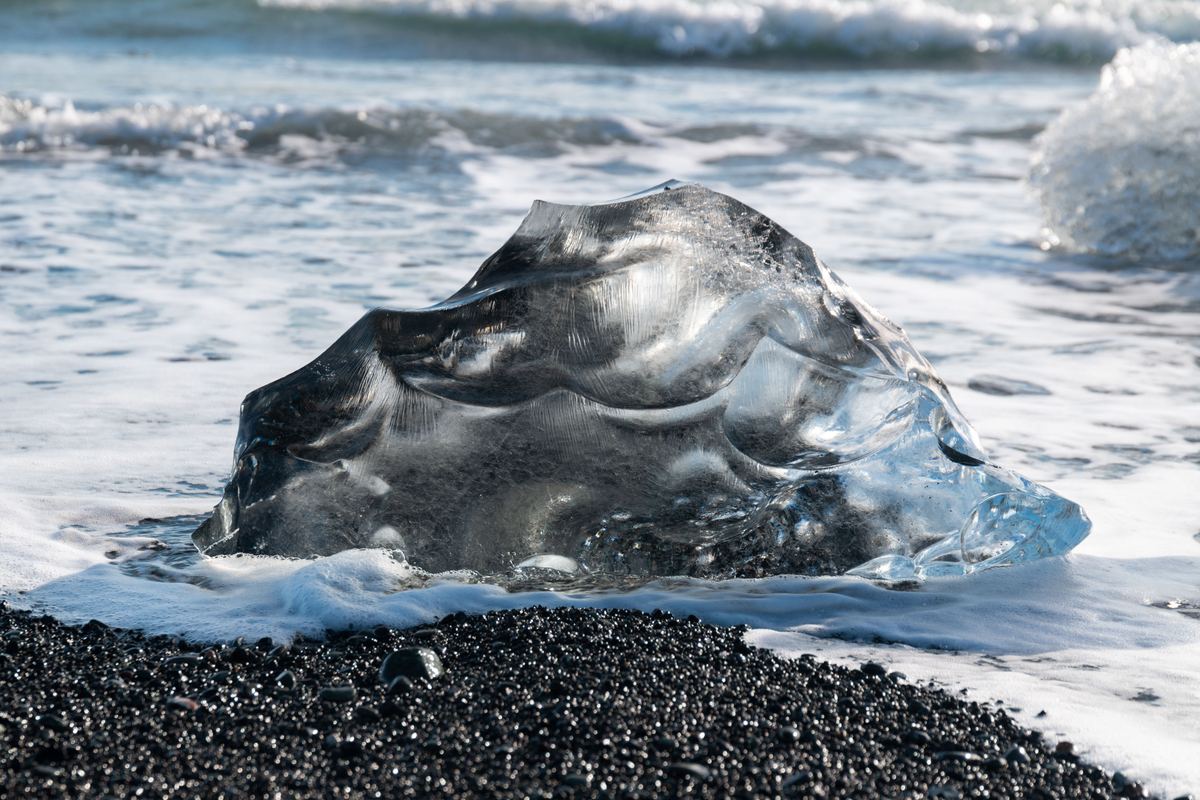
International visitors gave the beach the nickname The Diamond Beach.
- About 10 minutesWalk from the lagoon
- 30–45 minutesTypical time on the beach
- 191 kmDistance from Vík í Mýrdal
- 8 °CSea water temperature, rarely exceeded
Names of the beach
| Name | Origin |
|---|---|
| Diamond Beach | Nickname from international visitors, based on icebergs that wash ashore on the black sand |
| Eystri-Fellsfjara | The beach's actual name |
| Fellsfjara | The black-sand beach next to Jökulsárlón |
Where the beach lies
Fellsfjara lies next to Jökulsárlón, south of road 1. Jökulsárlón itself is in southeast Iceland, in the southern region of Vatnajökull National Park, along Ring Road No. 1.
From Vík í Mýrdal the distance to the beach is 191 km, about a 2-hour drive.
How the ice reaches the sand
The river carries ice from the glacial lagoon towards the sea. The tides then wash it back onto the beach.
The amount of ice and its position on the beach vary with the tide, the weather and the season.
Tide and season
Low tide usually leaves the most ice on the sand. Winter generally brings more ice to the beach than summer, though no forecast can promise what any morning will deliver.
What the ice looks like
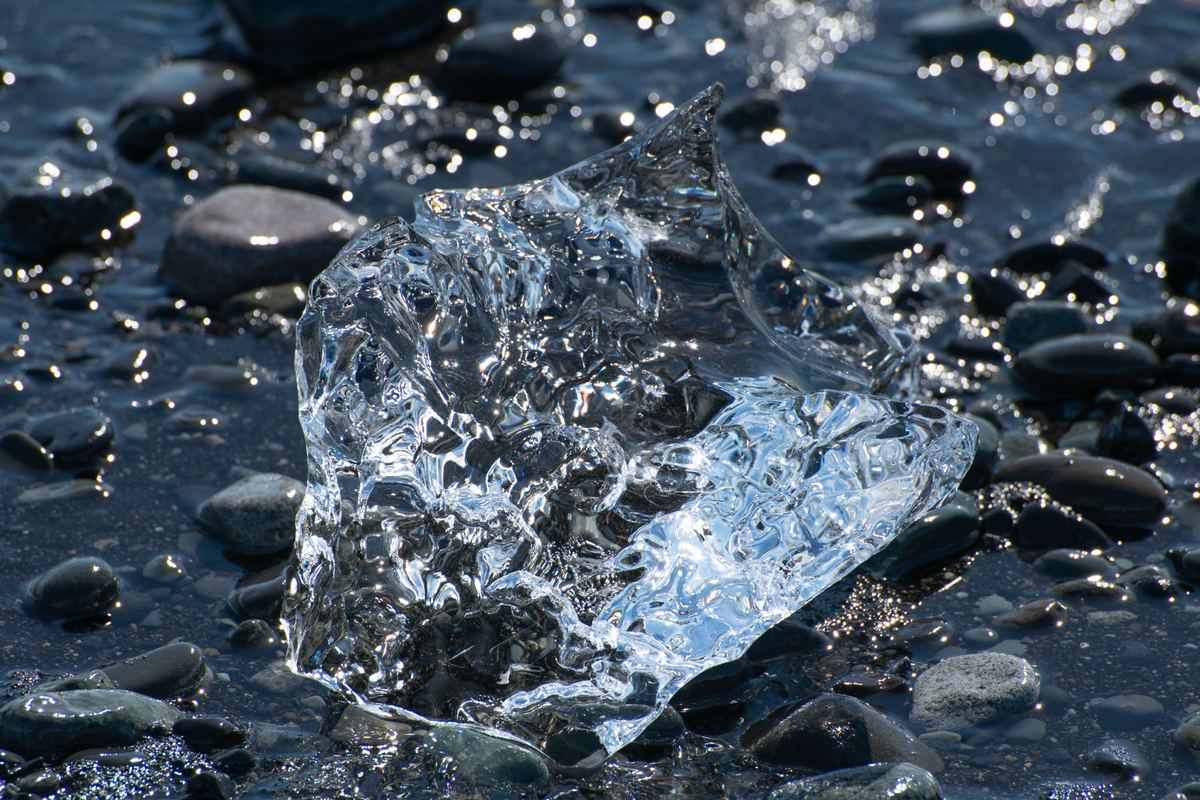
The pieces on the beach range from small clear fragments to blocks the size of a car.
Alongside clear and blue ice, some pieces are black-striped, banded with volcanic ash layers from past eruptions.
In winter, when the sun comes out, the ice on the beach looks especially spectacular.
Wildlife on and around the beach
- Seals are often seen swimming in the river mouth and the lagoon, and sometimes rest on the sand or on the ice.
- Arctic terns and great skuas nest on the sands around the lagoon and defend their nests, so visitors should stay on the paths.
- Orcas have occasionally been seen from the shore at Diamond Beach.
Parking and facilities
There are car parks at both the beach and the lagoon. Two parking areas serve the beach, one on each side of the river mouth, and the west side is quieter and often has larger stranded bergs.
Jökulsárlón, Eystri-Fellsfjara and Vestari-Fellsfjara form one parking-payment zone. A single payment covers all three lots until midnight.
The beach itself has no buildings, lights or kiosk. Services such as cafés and toilets are at the Jökulsárlón complex across the road, and electric car charging points are at the Jökulsárlón car park.
Walking to and along the beach
The beach is about a 10-minute walk from Jökulsárlón Glacier Lagoon. The path from the Eystri-Fellsfjara car park to the beach is short and flat, but the sand is soft.
Visitors must not hike over the bridge, though it is possible to hike under it.
Most visitors spend about 30–45 minutes on Diamond Beach itself. The beach is open all year, day and night.
Safety at the waterline
Visitors should never climb onto the ice and should stay away from ice close to the sea. A distance of 30 metres between visitors and the waterline is advised.
Diamond Beach has no official warning-light system for sneaker waves, unlike Reynisfjara. Sea water at the beach rarely exceeds 8°C, even in summer.
Driving conditions and aurora
A 4×4 vehicle is recommended for reaching the beach in winter or icy conditions, while a standard 2WD is sufficient in summer.
Diamond Beach and Jökulsárlón are an aurora viewing location from late August through mid-April.
The lagoon and park behind the beach
Jökulsárlón was reported in 2009 to be Iceland's deepest lake, at over 284 metres.
Vatnajökull National Park, which now includes Jökulsárlón, covers 14,967 square kilometres, about 14% of Iceland.
When settlers arrived in Iceland around AD 870, the glacier tongue was about 20 km north of its present location.
Tours near the beach
Tours around Jökulsárlón
Diamond Beach questions
Why is it called Diamond Beach?
The nickname comes from icebergs that drift out of Jökulsárlón and wash ashore on the black sand. International visitors gave the beach the name The Diamond Beach, and its actual name is Eystri-Fellsfjara.
When is there the most ice on the beach?
Low tide usually leaves the most ice on the sand. Winter generally brings more ice than summer, though no forecast can promise what any morning will deliver.
How far is the beach from the lagoon?
The beach is about a 10-minute walk from Jökulsárlón Glacier Lagoon, and there are car parks at both places.
Are there toilets or a café at the beach?
The beach itself has no buildings, lights or kiosk. Services such as cafés and toilets are at the Jökulsárlón complex across the road.
Is the beach open at night?
Yes, the beach is open all year, day and night. Diamond Beach and Jökulsárlón are an aurora viewing location from late August through mid-April.
How does parking payment work?
Jökulsárlón, Eystri-Fellsfjara and Vestari-Fellsfjara form one parking-payment zone. A single payment covers all three lots until midnight.
Which wildlife is seen at the beach?
Seals are often seen swimming in the river mouth and the lagoon, and sometimes rest on the sand or on the ice. Orcas have occasionally been seen from the shore, and Arctic terns and great skuas nest on the sands around the lagoon.
Is it safe to climb on the ice?
Visitors should never climb onto the ice and should stay away from ice close to the sea. Diamond Beach has no official warning-light system for sneaker waves.
Related guides
Sources
- Breiðamerkursandur - Fellsfjara | Visit South Iceland
- Black Beaches of Iceland: A Guide to the Coastline | Visit Iceland
- Diamond Beach | Glacier Guides
- Diamond Beach in Iceland: Icebergs, Parking & How to Visit
- The Diamond Beach in Iceland | Arctic Adventures
- Diamond Beach: Ice on Black Sand | Atlas Iceland
- Jökulsárlón
- Fellsfjara - Vatnajökull National Park
- South Iceland's Dynamic Geosites: Geysers, Glaciers, Rifts, and Rumbling Volcanoes | Visit Iceland
- Diamond Beach - Iceland Highlights
- Breiðamerkur- sandur | Visit Vatnajökull
- Diamond Beach: Parking, Access and a Lagoon Visit
- Diamond Beach Iceland Guide: Discover, Explore, and Travel Tips – Firefly Iceland
- Vatnajökull National Park - Wikipedia